Poetry as a weapon and mass instrument of War for human liberation
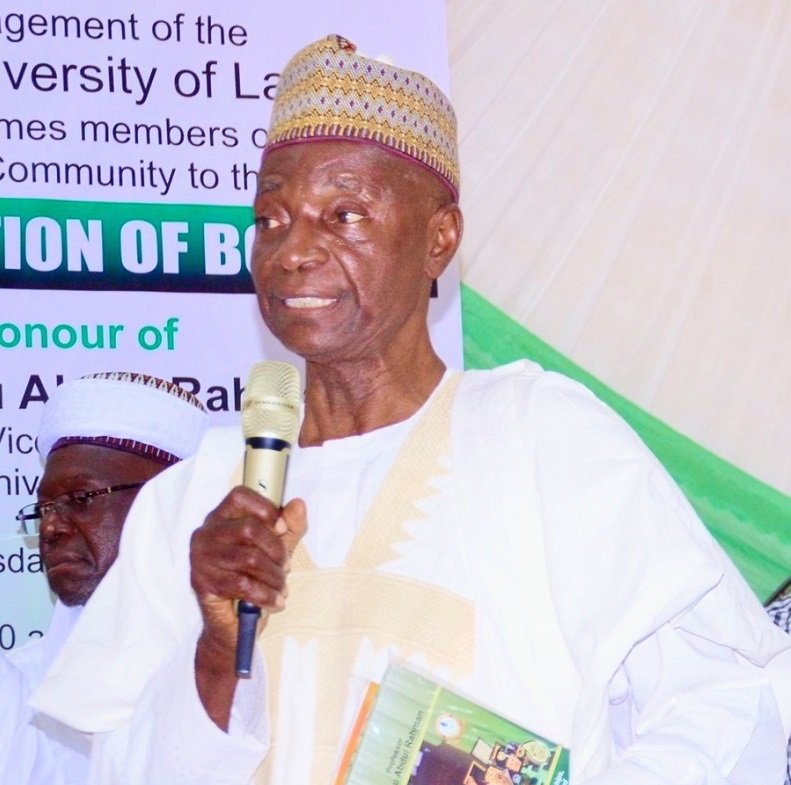
Por: Idris Amali
Through all phases of literature and literary expressions from classical to contemporary, and at any time in human existence, poetry has remained and remains a central hub, nerve centre and chief priests and priestesses of all the genres of human literatures. No other genre of literary expression expresses or conveys human or mortal emotions either of repression, terrorism, gender violence, expansionist and imperialistic resistance other than poetry.
In contemporary national, international and global politics driven by suppressive orientation or persuasions, the struggle to free the repressed, the exploitative, the dehumanized and victimized race needed concerted efforts globally to challenge such acts. This is where state, national and international organizations have the vital role to defend human and state rights globally.
In core indigenous-cultural and modern environments, oral performative poetry traditions and modern poetry across the globe, shape the opinions of the society and acts as social mobilization, a catalyst for social, political and economic against repressive regimes.
The role of poets against international repression or conspiracy to undermine a sovereign State was eloquently demonstrated during the Iraqi invasion by the United State of America. Just before the American aerial attacks and bombardments of Iraqi soil, the Iraqi Association of Poets in a massive solidarity protest matched against the American invasion of Iraq to the Presidential Palace. They presented their overwhelming support to the Government of Sadam Hussain and vehemently condemned the planned war against Iraq. The poetic aggression against the invasion of Iraqi sent strong waves across the globe indicating that when poets rise in poetic anger and arms, the world shakes as the poets were vindicated as no evidence of Weapon of Mass Destruction was found in the Iraqi arsenals. If the invaders had listened to the clarion calls of the Iraqi poets, there wouldn’t have been war and wall of strong enmity between Iraqi State and the Aggressor-State. A granite wall bearing permanent hatred between Iraqi and the transgressor created by this misleading war will stand the test of time with enduring hatred between the two States.
In Africa, close to us is Nigeria one of the most populous and richest nations in Black Africa, its vital citizens, the poets did not pay lip service to its people during the confronting national depression of grave concern. Those years of military repressive governance was vehemently resisted by Nigerian poets tagged “Poets Against The Military”. The documentation of the struggle to flush out the Nigerian military would be incomplete without the roles played by the revolutionary or radical Nigerian poets such as Odia Ofeimum, Niyi Ogundare, Idris Amali and others. These poets in their various outings condemned without fear the military junta for their autocratic, demeaning, arbitrary, dictatorship, and unbearable anti-people policies.
The recent Global Liberation Poetry on Gaza organized by World Poetry Movement not only documents the heinous destruction of human lives, property, barbaric and mindless treatment of human beings as animals but it has helped to shape human and global thinking tilting more than ever, the prolonged idea of self-actualization of the Palestinian State. Even the Papal Cathedral has advocated for an independent Palestinian State.
It must be wise at this point to importantly cite the Critical Statement of Nicolas Guillen (1975) on the huge responsibility of the poets in the mobilization and conscietialization of the people, urging them to demand for change:
Art cannot be abstract.
It must carry a message.
Must be utilitarian and
human, must create an
immediate reality, the
inevitable fusion of which
is action. Any art without
human content, without
a message, has for me the
value of the white sheet of
paper that no one can
read…Poetry is a weapon. The
poets of our era ought to
employ it not only for defence,
but also for the attack.
Nicolas Guillen (1975).
Talking about the role of the poets with particular reference to Idris Amali one of the Nigerian anti-military poets, critic Babayo Wakil pointedly submits:
He represents human dignity
and therefore any inhumane
treatment is evil that must be
exposed at all cost. The poet
sees poetry as a veritable, potent
and effective instrument to play
this social function of mass education
and mobilization. He hopes that, poetry
can be a potent instrument for social change.
Similarly, the Czech writer, Frank Kafka is important here:
lf the literary work we are reading does
not wake us up, why then do we read it?
A literary work must be an ice- axe to break
the sea frozen inside us.
Frank Kafka)
The world peace, respect for human dignity, sovereignty and value for human life are gradually deteriorating to an alarming and frightening level. This dire situation might sooner or later lead to international breakdown of law and order and escalating to full blown international or global crises, the avoidable 4th World War.
We as poets must resist this pending and looming disaster: The poets globally must stand against those factors of war. The World Poetry Movement (WPM) must continue to take the lead in this struggle to protect the rights of the individuals, states and nations, using all its legitimate means to de-escalate global crises.
5th January, 2026, Nigeria.
Idris Amali was born in the village of Upu, Otukpo, Benue State, Nigeria, in 1950. He is a prominent Nigerian poet, scholar, and literary critic, known for his advocacy of minority languages and his critique of social injustice through literature. His style, often described as “combative,” is considered a “social conscience” in the Nigerian poetry scene, using his work to denounce corruption, military authoritarianism, and contemporary conflicts. As an expert in oral literature, he integrates elements of Idoma folklore and symbols of African nature (flora, fauna, and climate) to question current sociopolitical realities. He graduated with a degree in Theater Arts from the University of Jos (1979) and earned his master’s and doctoral degrees in Oral Literature from the same institution.