The importance of poetry and its concerns
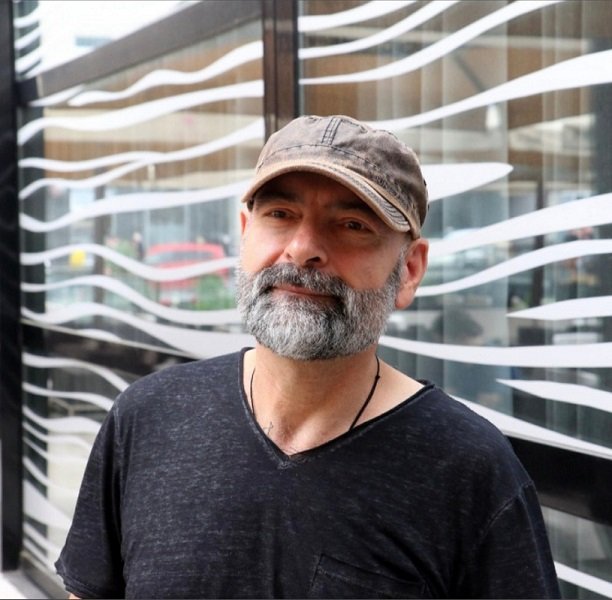
Por: Hussein Habasch
Poetry calls for love and tolerance and deep friendships between people of different affiliations and races. Poetry rejects cruelty, violence, wars and everything that contravene the humanity of the human. Poetry calls for the demolition of walls and the removal of barriers between people and to build bridges of love and unconditional dialogue, understanding and coexistence between different cultures and civilizations. Poetry calls for respect for nature and animals, our partners in this life. Poetry is transcontinental, passes all roads leading to the world, does not recognize the restrictions, barriers, borders and customs that hinder the movement of people. Poetry is the spectacular guest of life, hence life along with it remains ever spectacular, and that poetry will always be that solitary child who speaks only rarely, yet beams now and then. And that the true poet must grow a flower from the heart of a rock rather than a fertile soil. And that is the power of the poet comes from those rare and unique and marvelous flowers gathered from the orchard of words and life. Poetry is also to convince others that the mountains are sleeping hats and that the valleys are the water's leagues! And that a rock that coquets will inevitably become a poetry. And that the true poet can transform water into wine and make it a great feast out of an abstemious table. Poetry is the essence of fire, the essence of the roses and the essence of the essences. One of the duties of poetry is to turn tyrants into shovels for shoes, and drag the faces of murderers, criminals and thieves in the mire. The true bravery of the poet is to make all this ruin that wraps the neck of life like a noose to real poetry. The poet's real achievement when writing about war is not to let a single drop of blood to fall from the edges of his poem, and that a fine thread of beauty in a poem can enlighten an entire world. Poetry, fragile it is, has supernatural abilities. For example, it can transform a worm into a flying butterfly, a buzzing fly into a bird's chirp, without losing its balance or damaging its prestige with any ill. A real poem can be reached only through tangled, rough and dangerous routes, and that the poet who does not risk crossing it, his poem will seem stolen from his neighbor's yard. So, I'm grateful to the poetry and always owe it. For it is my home where I live and the window that I overlook the world through it. It is my room where I meditate, and my bar where I get drunk. It is my maze that I enter and get lost in it and my guide who guides me out is my sky, in which I swarm, and my earth in which I saw my foreign seeds. It is my obsession, sickness, addiction, and jealousy from which I cannot heal. It is also my therapy, so I cling to it with my heart, soul, and desire, clinging to the last beautiful, pure and noble things in this world.
Poetry and the World
Poetry cannot heal humanity’s pains or liberate nations from injustice or despotism; it is not one of poetry’s duties to lead revolutions or carry out justice and equality to the world. Poetry cannot stop humiliation and pain, which people are exposed to everywhere. Yet, poetry is like a scream in the face of this epidemic that spreads here and there; a scream in the face of wars, jails, killing, violence, cruelty, racism, exile, and destruction, all of which covers the universe; a scream that can embrace the world from all of its sides and spread moments of warmth, love, and liberty through its veins. At first, this poetic scream should be written well, in a powerful imagination, in a charm, miracle, love, and insanity; otherwise, it will fall in the well of antipathy. The world of poetry has a different shape from the world without it. If the world wears poetry, it will be resurrected from the ashes into the light, from dullness into delicacy. As the great Guatemalan poet Luis Cardoza y Aragon said, poetry is the only convincing proof of the existence of human beings, isn't what he said completely true?
In the end
In the end, all what I can say to my fellow poets is: Dear, write poetry on your arms, on your legs, on your backs, on your necks, on your cheeks, on your stomach, on your navels, on your fingers, on your chests ... For poetry must be attached to the flesh, close to the heartbeat, a part of the breath, intimate to the spirit, blood flows in the veins.
Hussein Habasch is a poet from Afrin, Kurdistan. He currently lives in Bonn, Germany. Born in 1970 in Şiyê Village. His poems have been translated into English, German, Spanish, French, Persian, Uzbek, Albanian, Russian, Romanian, Italian, Serbian, Macedonian, Bulgarian, Polish, Slovenian, Lithuanian, Vietnamese, Nepali, Hindi, Malayalam, Kannada, Tajik, Bengali, Turkish, Berber (Amazigh), Bosnian, Portuguese, Hungarian, Chinese, Greek, Mandarin (the language of Taiwan) and Tzotzil (the language of the Mayan peoples of Mexico), and has had his poetry published in a large number of international poetry anthologies, more than 100 anthologies. His books include: Drowning in Roses, Fugitives across Evros River, Higher than Desire and more Delicious than the Gazelle’s Flank, Delusions to Salim Barakat, A Flying Angel, No pasarán (in Spanish), Copaci Cu Chef (in Romanian), Dos Árboles and Tiempos de Guerra (in Spanish), Fever of Quince (in Kurdish), Peace for Afrin, peace for Kurdistan (in English and Spanish), The Red Snow (in Chinese), Dead arguing in the corridors (in Arabic) Drunken trees (in Kurdish), Boredom of a tired statue (in Kurdish), Flor del Espinillo (in Spanish) A Rose for the Heart of Life, selected Poems (in English) and Olvido (in Spanish). He participated in many international festivals of poetry including: Colombia, Nicaragua, France, Puerto Rico, Mexico, Germany, Romania, Lithuania, Morocco, Ecuador, El Salvador, Kosovo, Macedonia, Costa Rica, Slovenia, China, Taiwan, Cuba, Sweden, New York City, Sarajevo, Greece and Spain. Recipient of the Great Kurdish Poet Hamid Bedirkhan Award, awarded by the General Union of Kurdish Writers and Journalists. As well as the International “Bosnian Stećak” award for Poetry, awarded by the Bosnia and Herzegovina Writers Union. Bronze poetry award Aristotle from Naoussa international poetry festival in Greece.